Archives Outside

For people who love, use and manage archives

Archives Outside - For people who love, use and manage  archives

International Archives Day!

This is a great post from Kate Cumming on our sister blog Future Proof to celebrate International Archives Day which was on Sunday 9 June.

is the droids we're looking for in the Internet Archive?

Today’s records can also help tomorrow’s businesses to be smarter, more efficient and more strategic by using core information for clever reuse and analysis. But before they can serve any of these purposes in the future, we really need to protect and manage our archival records today.
Archives are really important. And today they really do need proactive identification, care and management from their creation to ensure they are going to be around for as long as our society needs to use them.

So let’s celebrate Archives Day on 9 June. Let’s treasure the amazing archival records we have and plan for the safeguarding and maintenance of our archival records into the future.

Learn more

November 2012 – Link Roundup

Metadata

Chris Hurley’s Stuff

An essential bookmark for all of those who are interested in professional accountability, governance and description. Chris Hurley has generously made his writings available online.

Chris has taught recordkeeping and written extensively on the subject. This site gathers together much of his published work. He continues to write and present at conferences and seminars. In recent years his work has appeared only on-line.

Ideas for making submissions to the current Commonwealth Government review of FOI legislation #foirev

Some FOI food for thought from the Recordkeeping Roundtable.

The following represents potential areas for a submission to Review of the Freedom of Information Act 1982 (C’wealth) and the Australian Information Commissioner Act 2010 (C’wealth) currently being carried out by Dr Alan Hawke at the request of the Attorney General Nicola Roxon. These were identified during the Recordkeeping Roundtable event ‘FOI under attack’ in Sydney on November 20, by our speakers, Brendan Molloy and Paul Farrell, and the participants.

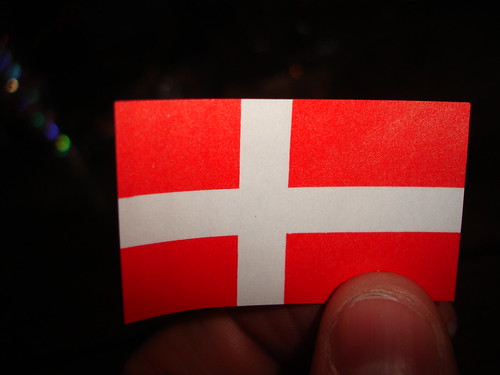
Danish Flag

Danish emigration archives

Emigration lists compiled by the Copenhagen Police from 1869 to 1940. These lists give the name, last residence, age, year of emigration and first destination of the emigrant from Denmark. The records are made available for the years 1869 to 1908 (394.000 emigrants)The Danish Emigration Data Base compiled by the Danish Emigration Archives and The City Archives of Aalborg

The Danish emigration material and the database
Following a number of scandals in which unsuspecting emigrants were conned by Danish emigration agents, The Danish parliament passed more stringent regulations on May 1, 1868. According to the new law, The Copenhagen Chief of Police was to approve and monitor all emigration agents in Denmark and authorize all overseas tickets made out in Denmark. This was to be done whether an emigrant would be traveling directly from Copenhagen to the United States or indirectly via another European harbor for destinations overseas. As an extra measure of control, all the information from each ticket was copied down in ledgers, and thus became the Copenhagen Police Records of Emigrants. A total of 90 thick volumes were compiled, containing the same type of information for every emigrant.

Past/Lives – Revealing Traces of a Former Sydney

Sydney’s past is still visible beneath the facade of today if you look close enough.

Past/Lives seeks to uncover the secrets, reveal the hidden parts and tell the forgotten stories of Sydney using the clues that have been left behind through the years.

Past/Lives chronicles those instances of poorly reconstituted Pizza Huts, lazily retooled milk bars and forgotten former points of significance we notice every day, but never really stop to look at.

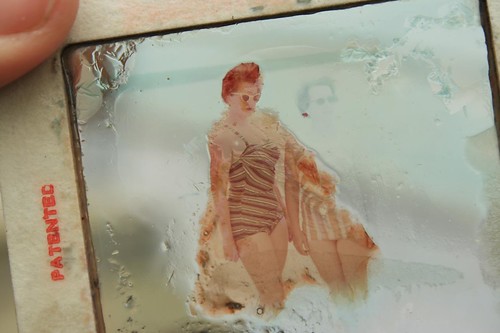
Water Damaged Bathing Beauties

Coping with water damage (via @spellboundblog)

This 10-minute video provides step-by-step guidance on dealing with water damage at museums, libraries, and archives. Practical tips on safety, simple equipment, and salvage priorities also make the video a useful guide for home owners who want to rescue treasured family heirlooms.

 A look at the Digger Picture

In 1919, when William Ifould, the principal librarian of the Mitchell Library, placed a newspaper advertisement offering ”good prices” for the original diaries of Australian soldiers who had taken part in the Great War, there was a promising response.

But Ifould was a hard man to please: he was scathing of some offerings and rejected others in his quest for good-quality accounts for future students.

Now, as the centenary of the start of World War I nears, the diaries are being re-examined, rediscovered and digitised for a new audience online…………………

…….Elise Edmonds, a librarian at the State Library, says some 1000 diaries by 400 diarists are being transcribed by a small group of volunteers fuelled by cups of tea.

pulse - detail

National Digital Forum Conference 2012

Last week the National Digital Forum Conference was held in New Zealand.         Fortunately @armchair_caver has created a twitter archive for the event, which for those of us who were unable to attend is the next best thing. It is jam packed with insightful commentary, posts and links (with occasional references to alcohol).


October 2012 – Link Roundup

Halloween

A Scary Halloween Blast From the Past

In honour of Halloween lets take a look back at an old post about the story of Fishers Ghost

Want to hear a ghost story? Well, make yourself comfortable.

The origin of this story dates back 184 years, to 1826. When murderous intent was nigh…

Frederick Fisher and George Worrell were the best of friends and worked a farm in Campbelltown. George Worrell (or Worrall) was a waggoner from Cheshire who had been transported for life to New South Wales. He arrived in 1813 on the Earl Spencer. In 1818, when he was 31 years old he petitioned for and received a Ticket of Leave – the petition described him as being  of “Industrious habits, and of an honest Character….and Sober”…

Anyone up for a Halloween Challenge?

Nova Scotia Archives has tweeted a Halloween Challenge. Is anyone willing to try and recreate this photo?

Look mum, that's me

The social life of photographs: State Library NSW on Historypin

The State Library of NSW has more than 1 million photographs in our collection, including theearliest known photograph taken in Australia (1845).  The Library also has a Flickr Commons account where many of our images can be viewed.  In the process of testing social media tools for delivering library services we thought Historypin offered something different…

Can you use Pinterest for Genealogy?

Pinterest is almost completely visually oriented, so whether or not Pinterest would be useful for genealogy would seem to be a really good question. Pinterest is the one of the newest social networking websites, but has grown rapidly into one of the most popular sites.

Hydro

The Future Proof Mythbusters!

As a profession we urgently need to start mythbusting. I think we need to start countering the negative myths and stereotypes that are surrounding our role because persistent myths and stereotypes about records management are starting to threaten business information.

Calling all Postcard Lovers

Do you love postcards, cigarette and trade cards? Then the website of the New South Wales Postcard Collectors Society Inc. could be the place for you.

Postcards, Cigarette and Trade cards:

* depict almost every aspect of human activity, endeavour and interest.

* provide vivid and often attractive images of great relevance to a very wide range of people with interests as diverse as local history, military and naval history, Australiana, advertising, sports such as cricket or football, art nouveau, entertainment, ethnography, anthropology, railways, shipping, aviation, fantasy, children’s art, animals and birds (both domestic and wild), glamour, humour, rural life and traditional industries such as timber, mining, wheat and wool, fine arts and crafts.

Moving House - big move

To Keep or not to keep? Records appraisal and moving house

Rob Johnson from The National Archives (United Kingdom) examines the art of appraisal for both house movers and recordkeepers alike.

Anyone who has moved house will understand that when it comes to the logistics, size really does matter. Because my new home is smaller than the last, I had to ‘appraise’ my belongings to determine their value, and dispose of items accordingly.

As I sat there on a dusty floor with a bin bag, I realised that my home and working lives had suddenly collided…

The process of knowing what you have and how valuable it may be is fundamental to Information Management. Records ‘appraisal’ is a core part keeping an organisation running efficiently – without knowing what value your records hold, useless stuff will clog up your cupboards and servers, whilst useful information remains inaccessible and unexploited.

How did I know what to keep ahead of the big move? Today’s blog is about the types of value Government records and my ‘stuff’ at home may have in common…

Collaboration is our destination

A large goal for cultural heritage institutions should be to support the engagement of the community and to work with appropriate people in schools to support common interests. I have spent my career on the cultural heritage side, reaching out to schools and others to demonstrate what resources such institutions can share. I am now on the other side, but remain dedicated to the idea of promoting the value of museum, libraries and archives.

September 2012 – Link Roundup

Our link love for September

QueryPic Exploring digitised newspapers from Australia & New Zealand

Check out the coolest new digital history tool from @wragge.
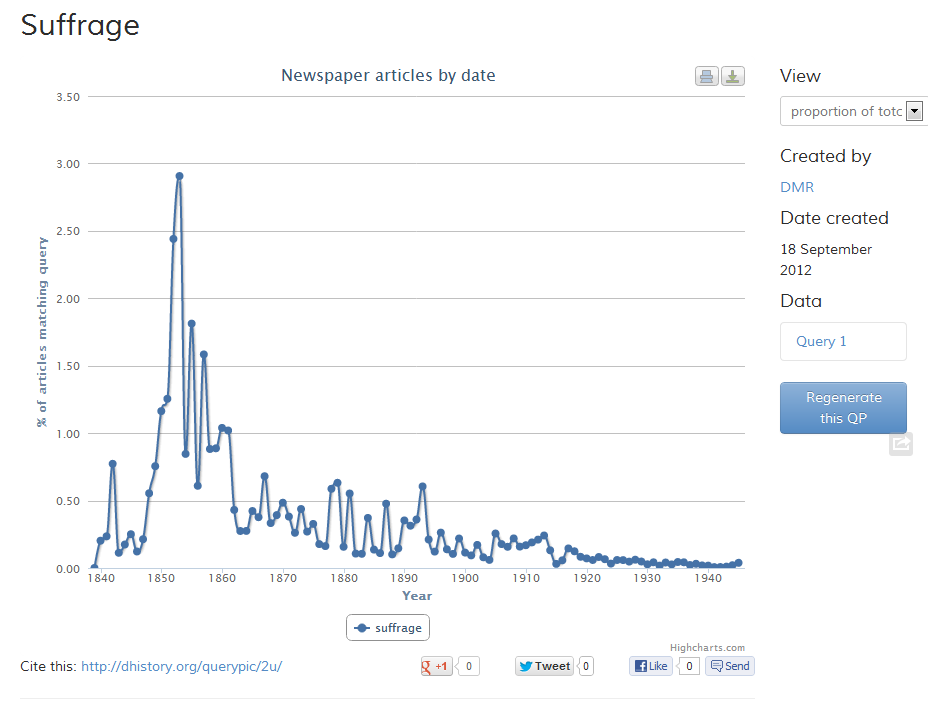
 

QueryPic provides a new way of seeing, searching and understanding the digitised newspapers made available by Trove and Papers Past.

Follow changes over time. Map trends and patterns. Follow a hunch. Frame a question. Explore…

To start using QueryPic visit the Home page.

To learn more about QueryPic visit the Help page.

For inspiration and possibilities check out the Explore page.

Bristol's traumatic last public hanging

Guides to the Gallows

The archives in the Harvard Law School Library include broadsides that accompanied executions in England. The collection of broadsides at Harvard began in 1932, complementing the extensive collection of 18th and 19th century British and American trial documents.

On Nov. 30, 1824, a London banker named Henry Fauntleroy was hanged in public outside Newgate Prison, one month after being sentenced to death for embezzlement. There were 100,000 onlookers.

Many of those watching paid a penny each for a broadside printed just that morning. The single sheet describes Fauntleroy’s reaction when his appeal was denied….

…During England’s Bloody Code period, the number of crimes punishable by death escalated from 50 in 1688 to 220 by 1800. By then, a man, woman, or child could be sentenced to death for “uttering” (passing along fake documents), forgery (Fauntleroy’s crime), poaching, prostitution, insanity, petty theft, or fortune telling.

Read more at the Harvard Gazette

Bilateral Digitization at Digital Frontiers 2012

A transcript of a talk given by one of our favourite crowdsourcing bloggers Ben W. Brumfield.

……. In 2012, the democratization of digitization technology may favor informal collections over institutional ones, privileging online access over quality, completeness, preservation and professionalism.

Will the “cult of the amateur” destroy scholarly and archival standards? Will crowdsourcing unlock a vast, previously invisible archive of material scattered among the public for analysis by scholars? How can we influence the headlong rush to digitize through education and software design? This presentation will discuss the possibilities and challenges of mass digitization for amateurs, traditional scholars, libraries and archives, with a focus on handwritten documents.

View the full talk and slides at Collaborative Manuscript Transcription

shreds

Govt Wages War on paper

The decades-old pipedream of the paperless office will be within reach in three years – because taxpayers can no longer afford to put it off.

National Archives of Australia director-general David Fricker says federal government agencies are now spending about $220 million a year storing their paper records.

“And that amount is only going to grow, as more information is created,” Mr Fricker said. “Two-hundred-and-twenty-million dollars is not sustainable; it’s wasteful.”

The director-general and Arts Minister Simon Crean, who oversees the archives, toured the agency’s Mitchell repository today, where some of the government’s most important historical documents are conserved.

Advertisement

Mr Crean warned public servants they had until 2015 to shift to a digital archiving system, as the government would not allow paper files to be produced after that date.

Read the full article at The Sydney Morning Herald

Library seeks help to digitise collection

THE NATIONAL Library is seeking a partner to digitise its collection of genealogical and other material in a move that may mean the state institution puts its collections behind an online paywall.

The library has sought expressions of interest from potential commercial partners as well as the not-for-profit sector. A link-up with a commercial entity would almost certainly involve charging for online access to records, particularly genealogical records.

“We are open-minded as to who we partner with. It could be a philanthropic donor, an academic institution or a commercial business; it could be Irish or international. The core issue for us is that the partner must have the resources, funding and people and we bring the collection,” said Fiona Ross, director of the library.

Learn More at The Irish Times.
Paper flowers and box

“Thank you very, very much J. Edgar Hoover”

On May 10, 1966 J. Edgar Hoover, the Director of the Federal Bureau of Investigation, wrote Alex Rosen, head of the Bureau’s General Investigation Division, thanking him for a gift certificate to a Washington, D.C. nursery.  The gift was in honor of Hoover’s anniversary as director.  “I shall derive much enjoyment in selecting what I want for my yard and home,” Hoover wrote.

For almost fifty years Hoover received such gifts from Bureau personnel as well as friends and admirers.  Copies of various congratulatory communications to Hoover, many enclosing gifts, and his responses are contained in over thirty boxes found in Record Group 65, Records of the Federal Bureau of Investigation (Congratulatory Letters to J. Edgar Hoover, 1924-1971, Director’s Office Records and Memorabilia).

Learn more about J. Edgar Hoover and his gifts

Web Sites With a Historical Bent Join a Place to an Image

A number of photo-sharing sites are being transformed from places to look at pictures into tools to connect historical documents and give more people a sense of history.

Most sites do not yet take advantage of location-based data as a means to search, as historypin.com does. But the other collections are going to take you back in time.

Historypin.com is clearly one of the most ambitious of these sites. It is aggressively courting local historical societies to encourage them to upload their archives to the site. Already, several hundred institutions have used the site’s bulk uploading tools to add thousands of photographs.


Read the full story at the New York Times
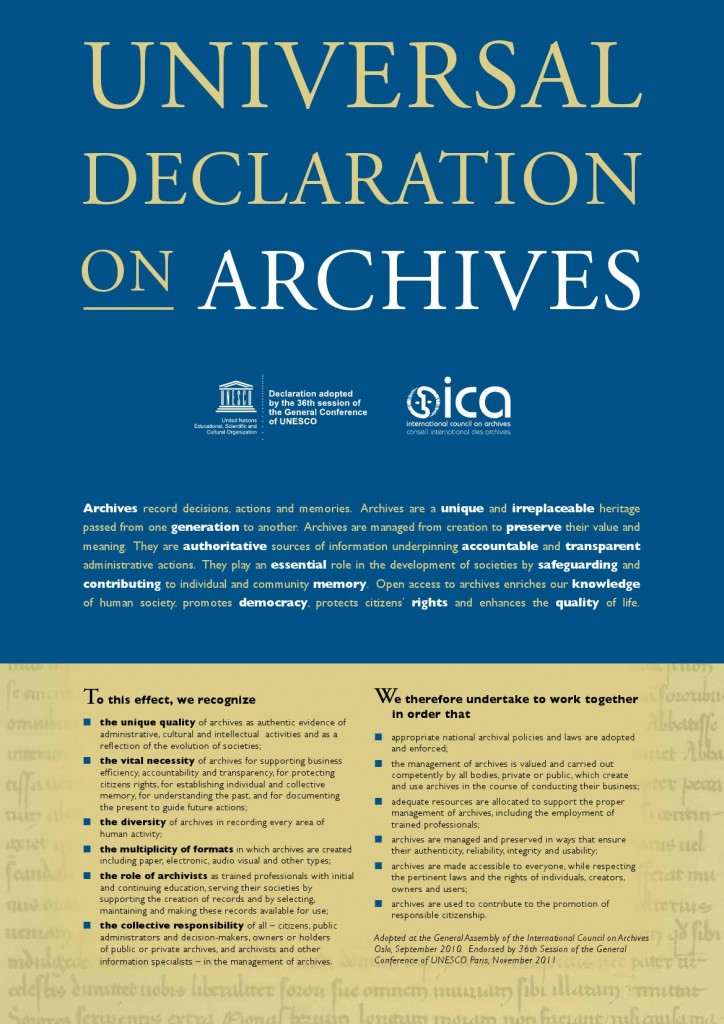
Register your support for the Universal Declaration on Archives


The Universal Declaration on Archives is a statement about the relevance and importance of archives to the general public; it is an articulation of the specific connections between records and archives and good governance, basic human rights and entitlements, cultural and community identity, history and heritage. It details the unique characteristics of archives and their management requirements to ensure ongoing access for as long as they are needed.

Do you like what it says? Register online to show your support